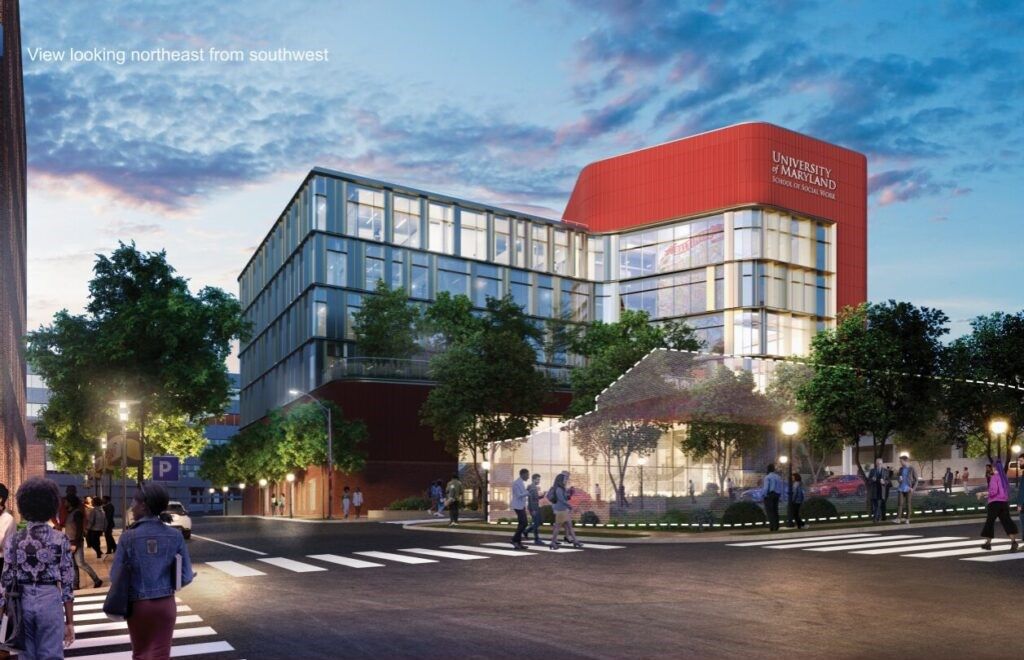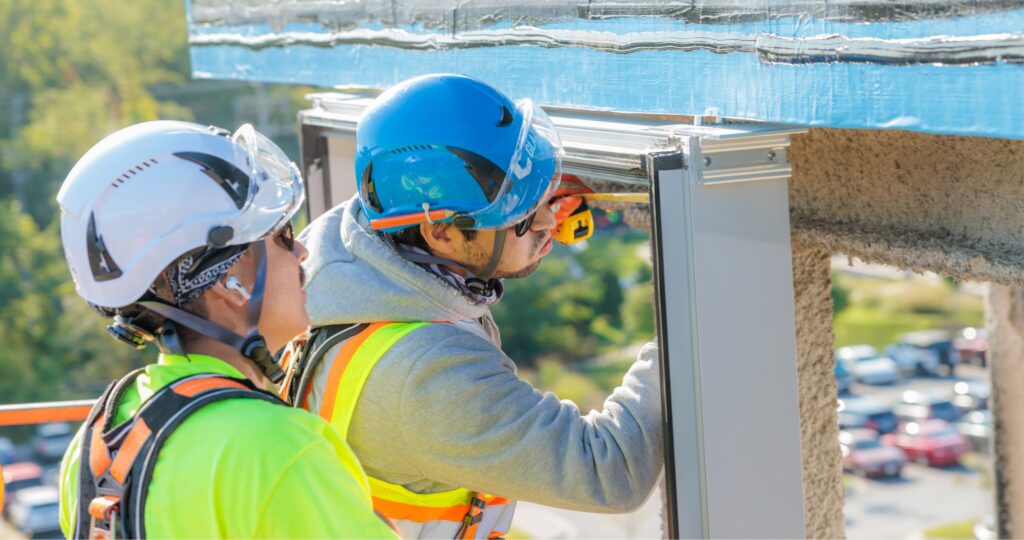
How high-performance glazing is helping shape a more sustainable future at the University of Maryland School of Social Work.
When you think of an energy-efficient building, a façade made almost entirely of glass might not be the first thing that comes to mind.
But at the new University of Maryland School of Social Work in Baltimore, that’s exactly what makes this project so interesting.
Designed to use 65% less energy than a traditional building and operate without fossil fuels, this project is pushing the boundaries of sustainable construction. Even more impressive? Nearly 80% of its exterior façade is glass.
So, how do you balance an expansive glass design with ambitious energy-efficiency goals?
The answer lies in the performance of the glass itself.
More Than a Glass Façade
A building’s energy efficiency depends on much more than the systems operating inside it. What surrounds the building is just as important.
At the University of Maryland School of Social Work, rooftop solar panels, a geoexchange heat pump system, energy recovery, and chilled beams all contribute to the building’s net zero energy goals.
But even the most advanced mechanical systems can only do so much if the building envelope allows excessive heat to enter or escape.
That’s where high-performance glazing makes a difference.
For our team at Chesapeake Glazing, this project demonstrates how commercial curtain wall systems can contribute to sustainable building design without compromising architectural vision.
The Technology Behind the Glass
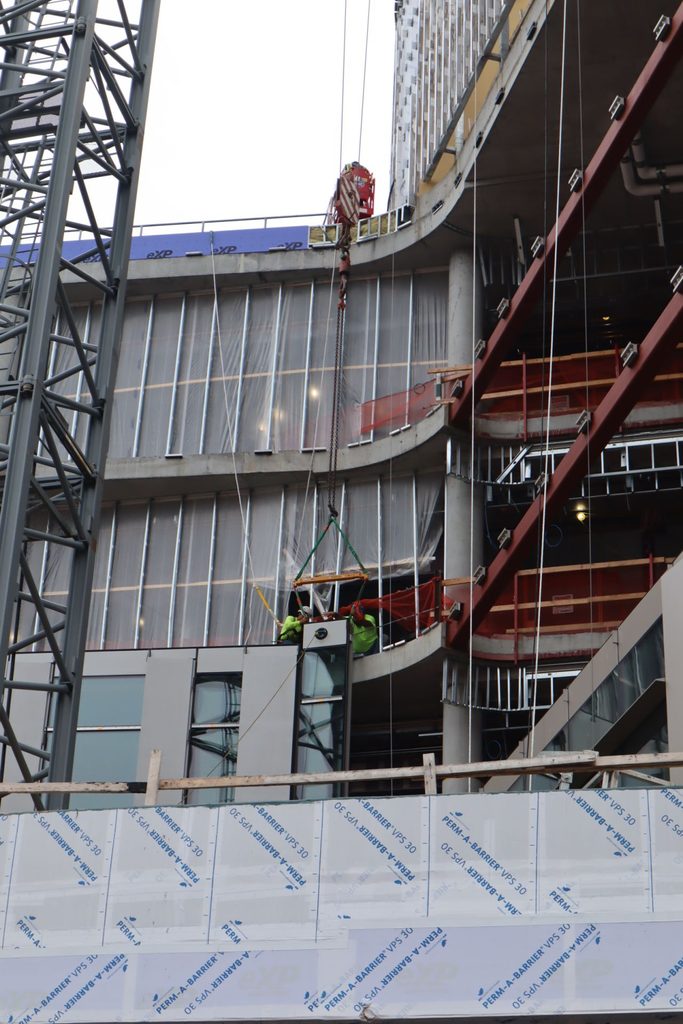
The building’s curtain wall features triple-glazed Viracon insulating glass units with bird-friendly frit and a U-factor of 0.17.
That U-factor is particularly important. It measures how readily heat passes through a window or glazing assembly. The lower the number, the better its insulating performance.
In this case, the triple-glazed units are designed to reduce heat transfer by approximately 40%, helping the building maintain more consistent interior temperatures while reducing demand on its heating and cooling systems.
The University of Maryland estimates that the high-performance building envelope will help reduce:
- Heating loads by 12%
- Cooling loads by 4%
And the sustainability benefits extend beyond energy efficiency. The bird-friendly frit makes the glass more visible to birds, helping reduce the risk of collisions with the expansive façade.
It’s a great example of how thoughtful material selection can address several building performance goals at once.
Where Architecture Meets Performance
Of course, the technical specifications are only part of what makes this project special.
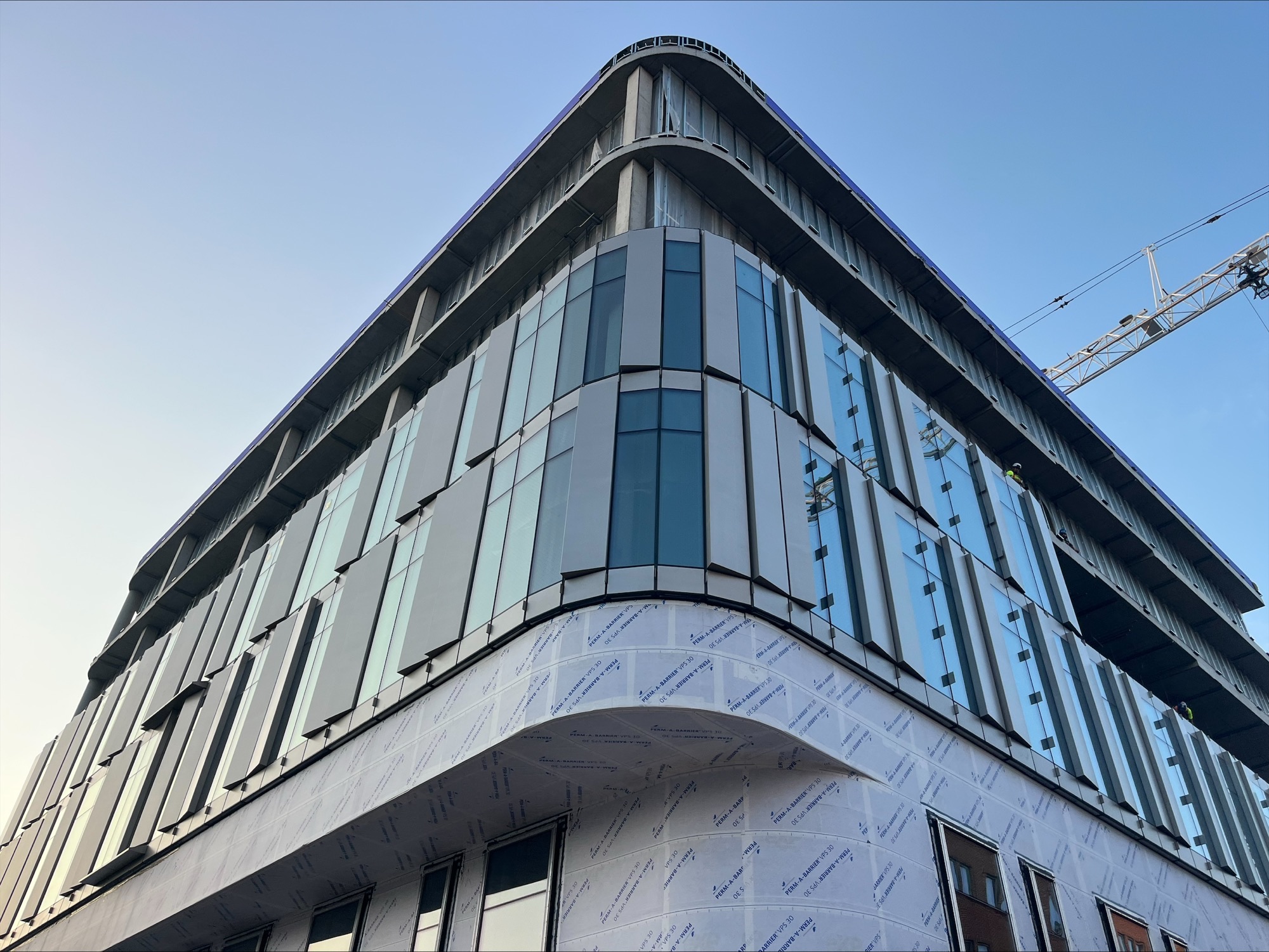
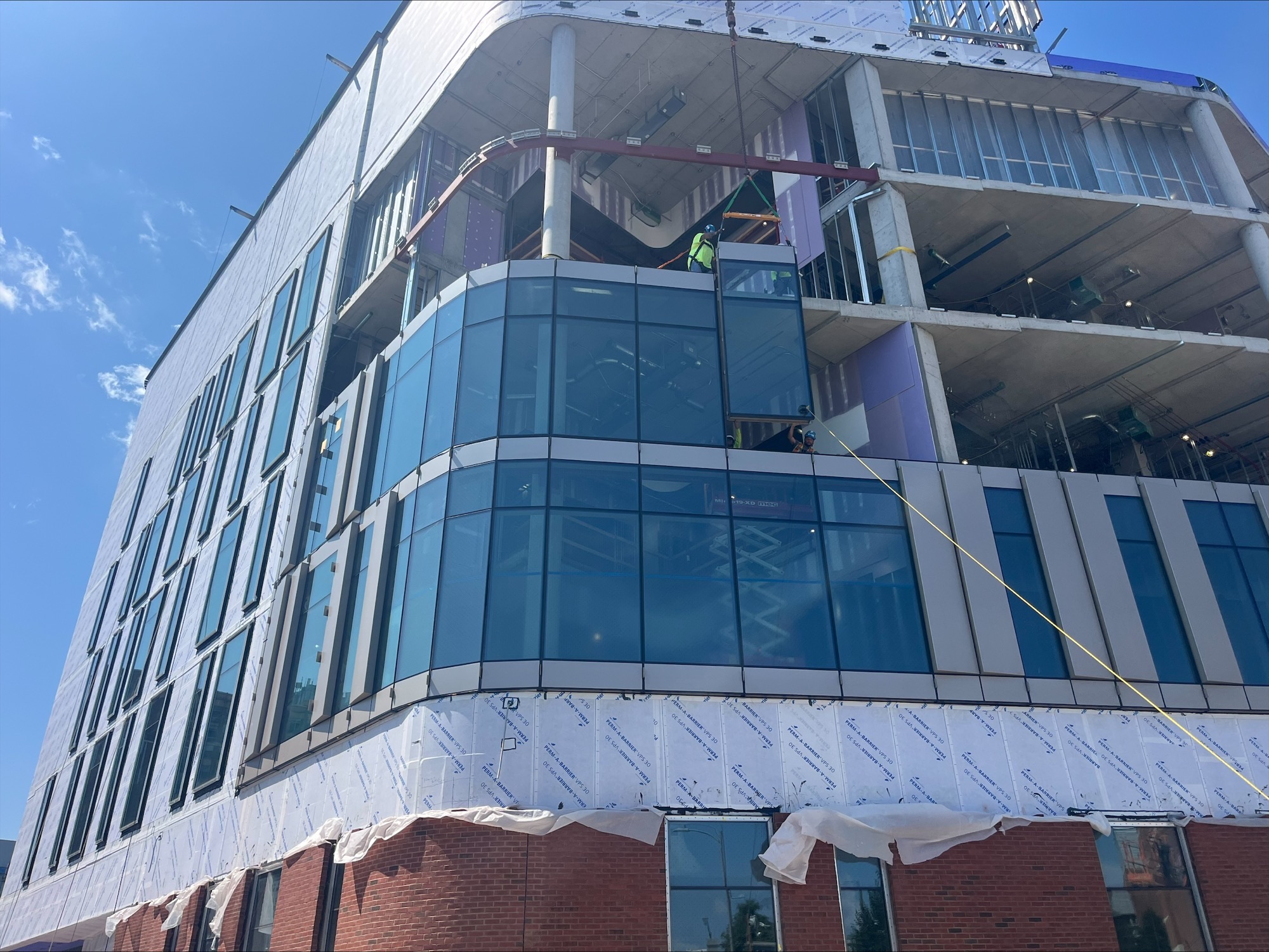
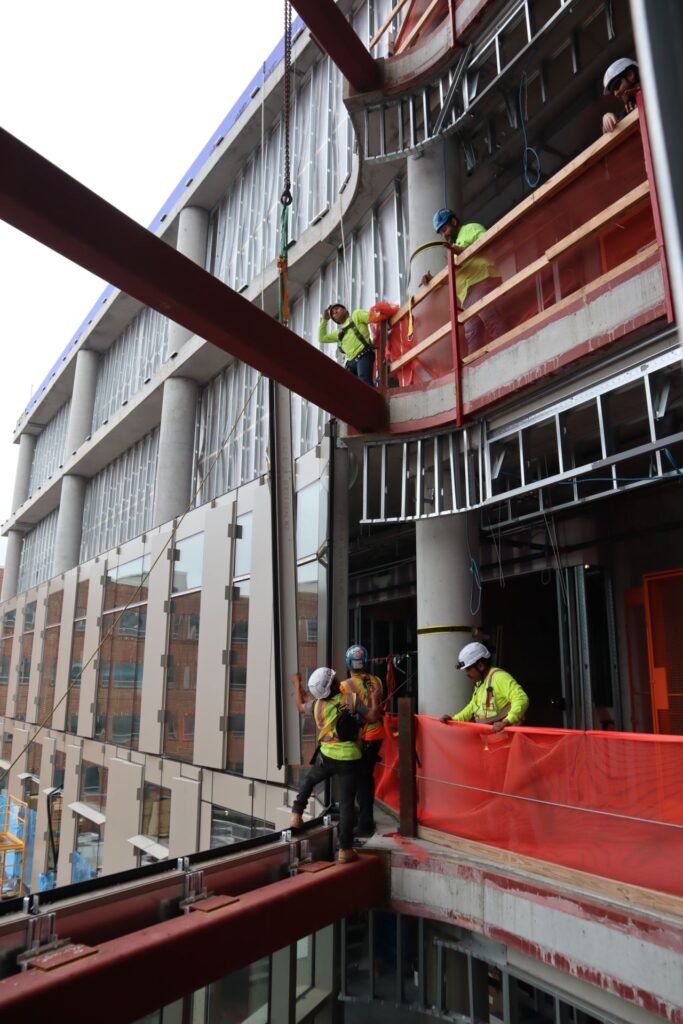
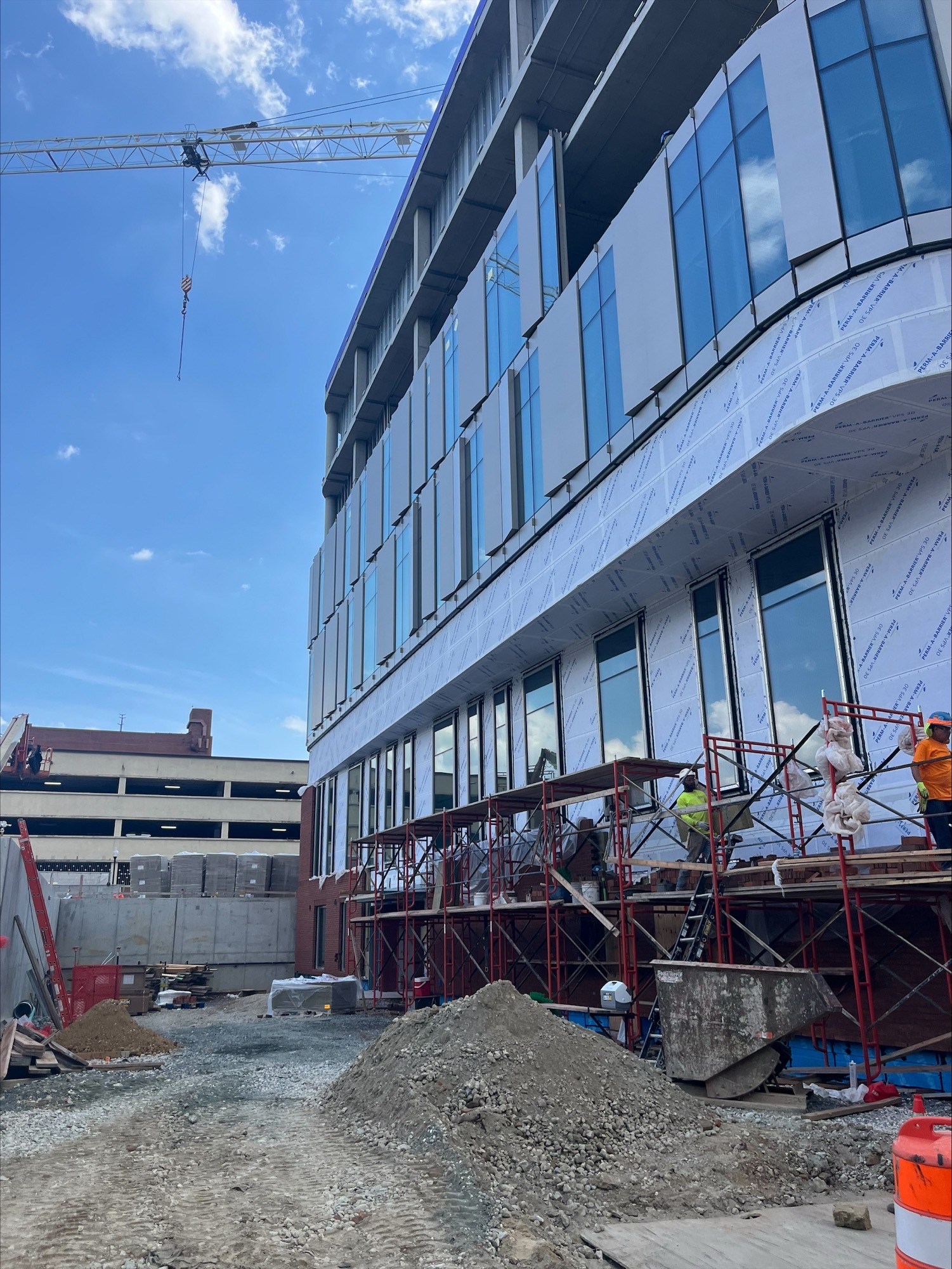
As our team brings the curtain wall system to life, the building’s architectural character is becoming increasingly apparent. The curved glass sections are especially distinctive, helping define some of the structure’s most prominent exterior features.
These elements require careful installation and coordination to achieve the intended design while maintaining the performance expected of the system.
It’s a balance we understand well at Chesapeake Glazing. Glass can be one of the most visually defining elements of a building, but what it contributes goes far beyond appearance.
Where Architecture Meets Performance
As the construction industry continues working toward more energy-efficient buildings, high-performance glazing will remain an important part of the conversation.
The University of Maryland School of Social Work is a reminder that sustainable construction doesn’t depend on one innovative technology. It takes multiple systems working together, each contributing to a larger goal.
We’re proud to play a role in bringing this project to life and contributing to a building designed with long-term energy performance in mind.
Because sometimes, one of the most important things glass does for a building is something you can’t see.