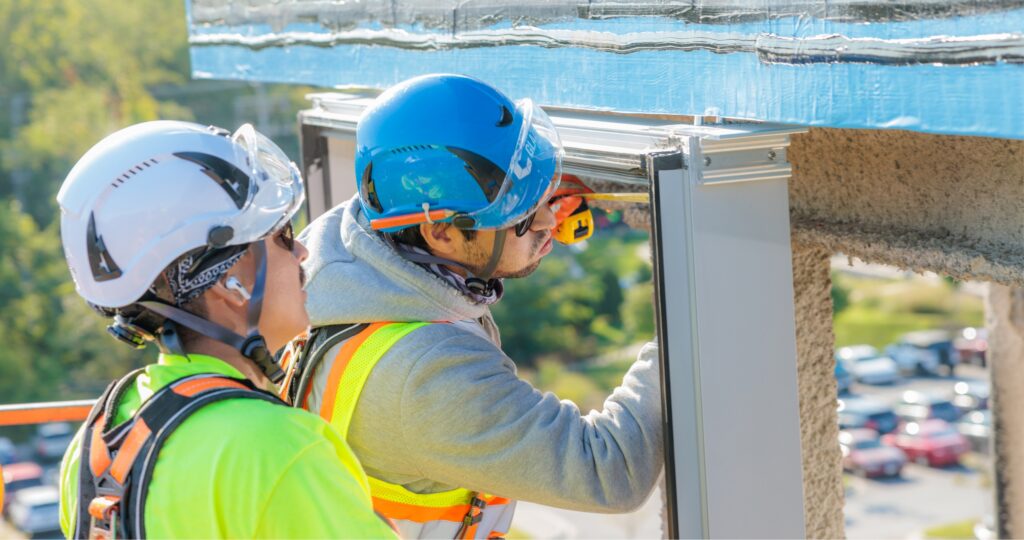
In commercial construction, storefront systems are often recognized for their visual impact on a building’s façade. However, beyond their architectural role, storefront systems serve an essential function as part of the building envelope.
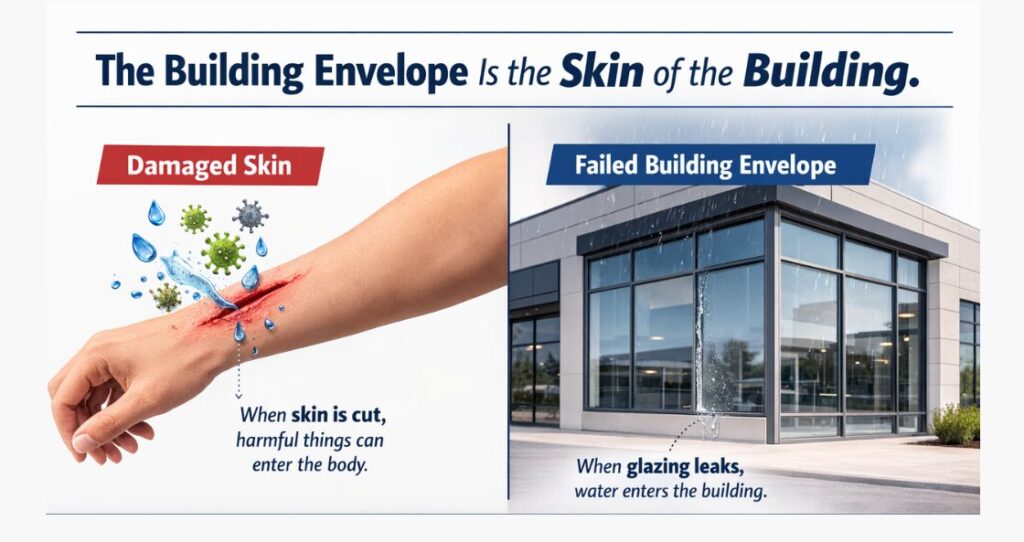
The building envelope forms the barrier between the exterior environment and the interior of the structure. It controls the movement of water, air, and temperature while protecting the building and the systems within it. One useful way to think about the building envelope is as the skin of the structure, similar to the skin of the human body. When properly installed and maintained, it protects the building from environmental exposure. When human skin is compromised, it allows bacteria and infection to enter, the same is true for a building skin, but the bacteria come in the form of water and air.
A storefront system is one of the most exposed components of the building envelope. Because it sits at the exterior face of the building and often experiences significant weather exposure and daily use, its performance depends heavily on proper installation.
The Impact of Water Intrusion
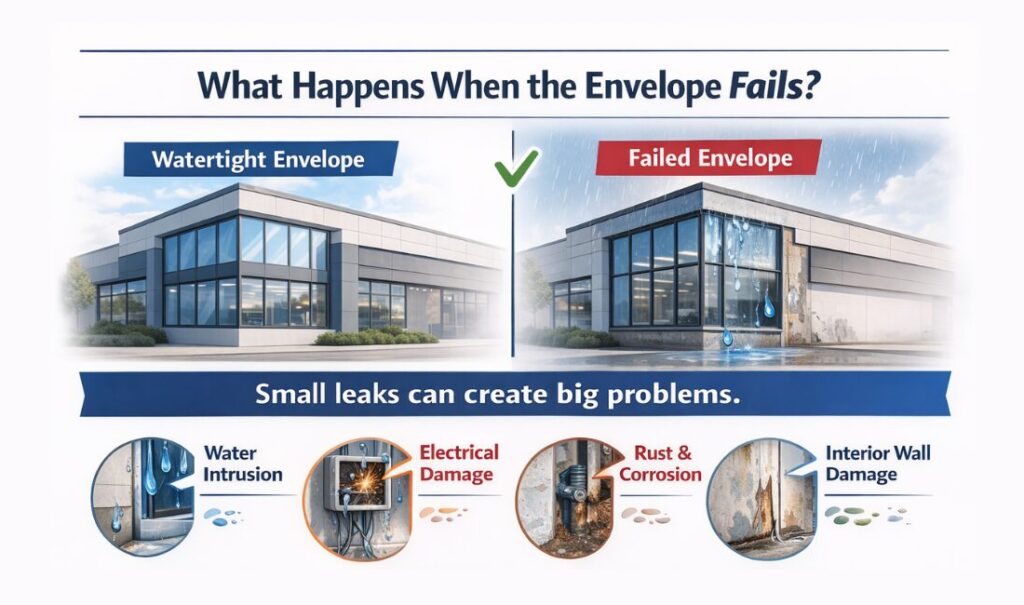
Water intrusion is rarely isolated to a single location. Once moisture enters the building envelope, it can begin affecting surrounding materials and assemblies. Over time, this can lead to corrosion of metal components, deterioration of wall systems, damage to interior finishes, and potential electrical complications.
In many cases, the initial source of water intrusion can be traced to small installation failures. An improperly sealed fastener, an incomplete sealant joint, or a poorly installed glazing component can allow water to penetrate the system. What may begin as a minor issue at the perimeter of a storefront frame can eventually affect multiple areas within the building envelope.
For this reason, storefront installation requires careful attention to detail and a disciplined installation process.
Installation Practices That Protect the Envelope
A properly functioning storefront system relies on several coordinated components working together. The framing system, glazing gaskets, sealants, flashing, and drainage paths are all designed to manage and redirect water away from the building.
However, the performance of these systems depends on proper field installation.
At Chesapeake Glazing, installation begins with installing a level sealed sub-sill, then assembling and aligning the storefront frames before they are set into the opening. The frames are then adjusted until they are plumb, level, and properly aligned to ensure the system performs as designed.
Special attention is given to anchoring the frame. Adjacent conditions must be reviewed to ensure contour flashing by others are not penetrated Each fastener penetration is treated as a potential point of water entry.
Consistency across the installation is equally important. Our crews work in coordination so that fastening and sealing occur together, ensuring that each connection point receives proper treatment as the installation progresses.
Once the framing system is secured and sealed, the glazing process begins. Glass panels are set into preinstalled gaskets and secured with glazing wedges that compress the gasket system and create a continuous weather seal across the storefront assembly.
A Closer Look at the Process
While storefront systems may appear straightforward from the outside, their long-term performance depends on the details of installation.
The video below provides a closer look at the installation process and the approach our team takes to ensure storefront systems perform the way they are intended to, watertight the Chesapeake Glazing way.
Explore some of our other watertight building envelope projects here.